

LexCase regularly publishes articles on the most relevant news, be it regulations, case law or various opinions.

Healthcare: Medical device and in vitro diagnostic medical device supply shortages – Decree No. 2026-730 of August 1, 2026, details the mechanism.


Health: DGCCRF and aesthetic products – Overview of LED masks and associated cosmetic products

Health: Online advertising for stem cell therapies – ANSM suspends promotion by two Turkish clinics

Healthcare : An analysis of the wave of sanctions against wholesale distributors by the ANSM
Medical Devices: The CJEU Clarifies the Scope of a Distributor’s Duty of Care

LexCase’s health law teams have once again contributed to the *Product Liability & Safety 2026* guide published by Chambers and Partners

I RANKING I LexCase’s Healthcare team has once again been ranked among the best in Tier 2 in The Legal 500EMEA (Legalease) in the Industry Focus: Healthcare and Life Sciences category.
FLASH LIFE SCIENCE – Renewal of the Cooperation Protocol between the ANSM and the DGCCRF
Health: DGCCRF and aesthetic products – Overview of LED masks and associated cosmetic products
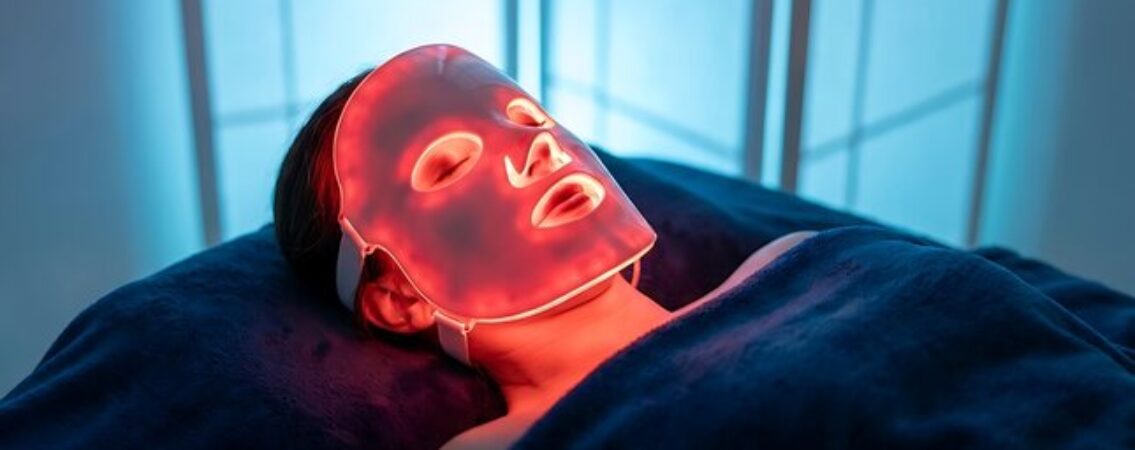
Face masks equipped with light-emitting diodes—”LED masks”—are used in phototherapy to target specific skin concerns such as wrinkles, acne, or scarring. According to the French Association of Aesthetic Medicine, LED masks stimulate cell regeneration using various light wavelengths.
The DGCCRF has announced that it is conducting an investigation into the LED mask sector this year. We take this opportunity to review their characteristics and certain legal implications.
Masks marketed in France feature varying technical characteristics:
- Varying wavelengths: LED masks contain diodes with different wavelengths, used either individually or in combination. They utilize, for example, blue (450–495 nm), yellow (570–590 nm), and red (620–780 nm) light, as well as infrared light.
- Varying claims: Distributors often market them as having anti-aging effects, smoothing or treating wrinkles, reducing dark circles, brightening the complexion, firming the skin, etc.
Depending on the case, these claims may or may not be substantiated by studies, as highlighted by *60 Millions de Consommateurs* in an article dated June 9, 2026. - Varying regulatory classifications: Masks marketed in France fall under different regulatory categories. Some are classified as medical devices and are therefore subject to regulatory obligations arising notably from Regulation (EU) 2017/745 of 5 April 2017 on medical devices (MDR). Others are marketed as aesthetic devices.
While some masks highlight their “CE certification,” this does not automatically imply classification as a medical device.
This results in significant variation in the applicable standards.
What criteria determine whether a mask qualifies as a regulated medical device?
In France, the medical device status can apply to certain “aesthetic” products—those lacking an intended medical purpose but sharing characteristics and risks similar to medical devices. These are the products listed in Annex XVI of the Medical Device Regulation (MDR).
Annex XVI covers “Equipment intended to be used on the human body for high-intensity electromagnetic radiation (e.g., infrared, visible light, ultraviolet) emission…”
According to the MDCG 2023-5 guidance document, this specifically includes LED face masks, depending on their intended purpose.
If an LED mask is marketed for skin rejuvenation or the treatment of acne scars, it falls under Class IIb.
However, the list is not exhaustive, and a grey area remains:
- for claims that do not specifically target rejuvenation but relate to the concept of aging;
- for other claims, such as anti-wrinkle effects or evening out skin tone..
Furthermore, LED masks are often described as “non-invasive” while simultaneously being marketed as penetrating deep into the skin—reaching the dermis or hypodermis.
Yet, for certain borderline products, the classification assessment framework takes the product’s depth of action into account.
A second issue concerns cosmetic products marketed for use in conjunction with LED masks.
In an FAQ dated February 19, 2026, the DGCCRF noted—regarding another aesthetic procedure (microneedling)—”the simultaneous use of cosmetic products whose effects are purportedly enhanced by microneedling, even though these cosmetic products have not necessarily been evaluated for such use.”
This observation appears applicable to cosmetic products used with LED masks, which are marketed as being specifically designed for this purpose.
Furthermore, particular attention should be paid to the product’s classification when the associated mask is a medical device.
The aesthetics sector thus raises multiple issues regarding product classification, safety, and the provision of accurate information to consumers.